Florida water hardness by utility

Most of Florida drinks from limestone aquifers, so most of Florida has hard water. How hard depends on the utility, the plant and sometimes the season. These are the figures each utility publishes, with the disinfectant, which decides whether you need carbon ahead of a softener.

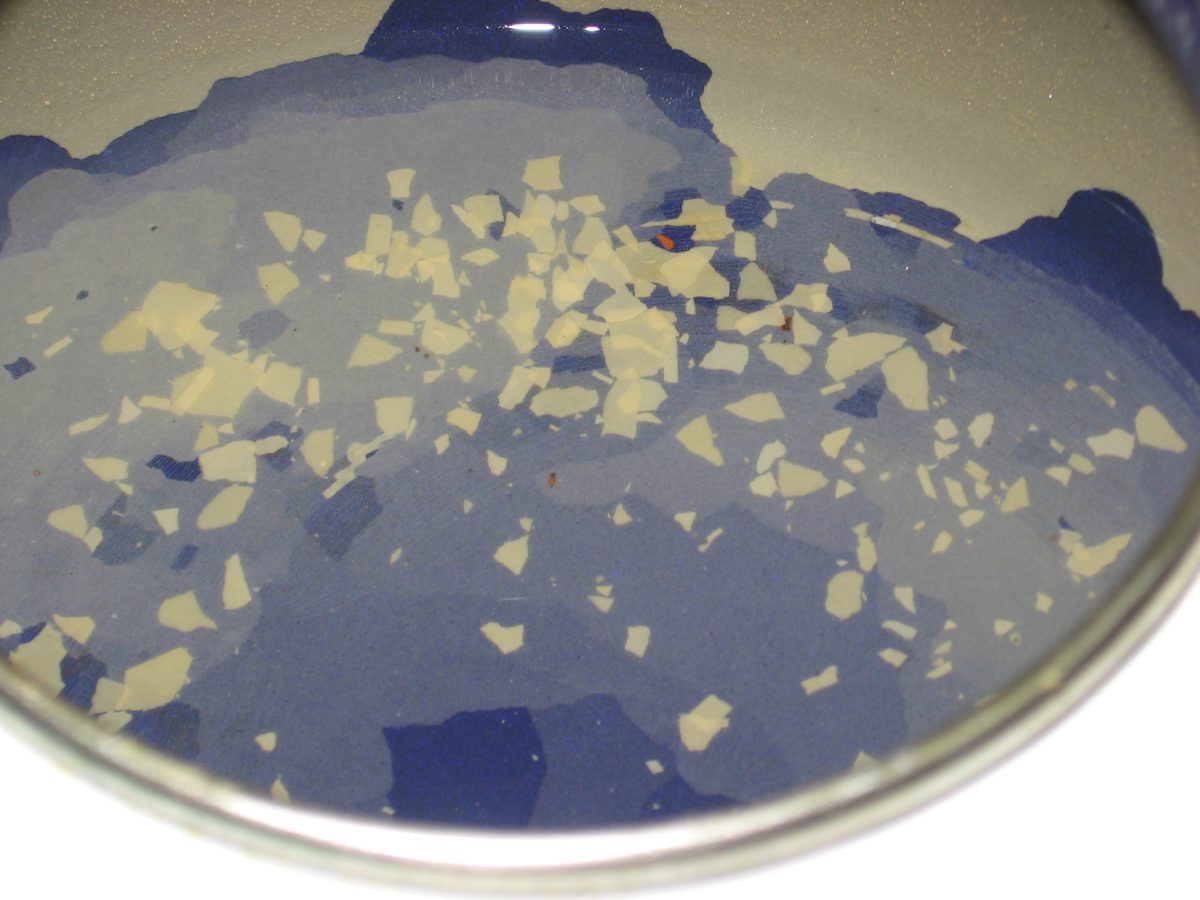
Limescale flakes in the bottom of a kettle

Hardness and disinfectant, 32 utilities

From each utility's 2025 water quality report or its own water quality page, read October 2026. Where a utility publishes no hardness figure, the row says so; test your tap. Utilities report in mg/L or ppm (the same thing); divide by 17.1 for grains per gallon.

South Florida
UtilityPublished hardnessgpgDisinfectantSource water
Miami-Dade Water and SewerMost of Miami-Dade County · 2025Not published—Chloramine; chlorine at the Hialeah RO plantBiscayne Aquifer; Upper Floridan for Hialeah RO
Fort LauderdaleFort Lauderdale and contract areas · 2025Not published—ChloramineBiscayne Aquifer
HollywoodCity of Hollywood · 2025Not published—ChloramineBiscayne and Floridan aquifers
Pompano BeachCity of Pompano Beach · Undated FAQ"1 to 2 grains"1–2ChloramineBiscayne Aquifer
Boca RatonCity of Boca Raton · Undated page65–80 mg/L3.8–4.7ChloramineBiscayne Aquifer
West Palm BeachWest Palm Beach, Palm Beach, South Palm Beach · 2025Not published—Chloramine, with a free-chlorine periodGrassy Waters surface water
Palm Beach County Water UtilitiesUnincorporated Palm Beach County and several cities · 2025Not published—Chloramine in the east, chlorine in the westBiscayne (east) and Floridan (west) aquifers
Port St. Lucie Utility SystemsPort St. Lucie · 2025Not published—ChloramineSurficial and Floridan aquifers
Tampa Bay
UtilityPublished hardnessgpgDisinfectantSource water
Tampa Water DepartmentCity of Tampa · 2025211 mg/L average12.3ChloramineHillsborough River, aquifer storage wells
St. PetersburgCity of St. Petersburg · 2025158 mg/L average9.2ChloramineTampa Bay Water blend, lime-softened
Pinellas County UtilitiesUnincorporated Pinellas and served cities · 2025217 ppm average, 189–244 range12.7 (11.1–14.3)ChloramineTampa Bay Water blend and county wells
ClearwaterCity of Clearwater · 2025Not published—ChloramineFloridan wells (RO) blended with Pinellas County water
Hillsborough CountyUnincorporated Hillsborough County · 2025Not published—ChloramineTampa Bay Water blend and county wells
Pasco County UtilitiesMost of Pasco County · 2025Not published—ChloramineAbout 95% Tampa Bay Water
Manatee County UtilitiesUnincorporated Manatee and served cities · 2025106–279 ppm6.2–16.3ChloramineLake Manatee and Floridan wells
Southwest Florida
UtilityPublished hardnessgpgDisinfectantSource water
Cape Coral UtilitiesCity of Cape Coral · 20255.5–6.5 gpg5.5–6.5Free chlorineUpper Floridan Aquifer, reverse osmosis
Fort Myers UtilitiesCity of Fort Myers · Undated FAQAbout 30 ppm1.8Free chlorineBrackish Floridan Aquifer, reverse osmosis
Collier County Water-Sewer DistrictUnincorporated Collier County · 202467 mg/L average, 42–94 range3.9 (2.5–5.5)ChloramineHawthorn and Tamiami aquifers
Central Florida
UtilityPublished hardnessgpgDisinfectantSource water
Orlando Utilities CommissionOrlando, parts of Orange and Osceola · Undated FAQ129 ppm average7.5Free chlorineLower Floridan Aquifer
Orange County UtilitiesUnincorporated Orange County · 2025Not published—Free chlorineFloridan Aquifer
Toho Water AuthorityKissimmee, St. Cloud, Osceola County · 2025Not published—Free chlorine; chloramine in the Eastern areaFloridan Aquifer
Seminole County UtilitiesUnincorporated Seminole County · 2025Not published—Free chlorine; chloramine in Chase GrovesFloridan Aquifer
Lakeland Water UtilitiesCity of Lakeland · 2023Combee plant 108 mg/L, Williams plant 126 mg/L6.3 and 7.4Free chlorineFloridan Aquifer, lime softening
Polk County UtilitiesUnincorporated Polk County, five systems · 2025101–132 ppm by system5.9–7.7Free chlorineUpper Floridan Aquifer
Daytona BeachDaytona Beach, South Daytona · 2025Not published—ChloramineFloridan Aquifer, lime softening
MelbourneMelbourne, part of Palm Bay, Brevard beaches · 202558–116 mg/L by month3.4–6.8ChloramineLake Washington and RO-treated Floridan wells
North Florida
UtilityPublished hardnessgpgDisinfectantSource water
JEADuval County, parts of Nassau and St. Johns · Undated page120–372 ppm by ZIP code7.0–21.8Free chlorineFloridan Aquifer
St. Johns County UtilitiesUnincorporated St. Johns County · 2025Not published (Northeast and Fruit Cove get JEA water)—Free chlorine; chloramine in CR 214 MainlandFloridan Aquifer
Clay County Utility AuthorityClay County · 2025Not published—Free chlorineFloridan Aquifer
Gainesville Regional UtilitiesGainesville, urban Alachua County · Undated pageAbout 140 mg/L8.2Free chlorineFloridan Aquifer, lime softening
TallahasseeCity of Tallahassee · Undated pageAbout 150 mg/L8.8Free chlorineFloridan Aquifer
Emerald Coast Utilities AuthorityPensacola, Escambia County · 2025Not published—Free chlorineSand-and-gravel aquifer

St. Petersburg: the city said on September 4, 2026 that softening at its Cosme plant is offline for rehabilitation and drought has shifted the regional supply toward groundwater, so its water is likely harder now than the 2025 average.

Tampa Bay Water members share a supply but publish differently. Pinellas County gives 189 to 244 ppm for its blend; Hillsborough County, Pasco and Clearwater publish no figure. We have not carried the Pinellas number over to them.

Manatee County swings from 106 to 279 ppm as the plant switches between Lake Manatee and groundwater. Set a softener for the high end.

Broward County, Lee County, Sarasota County, Naples and Ocala are missing because their report pages could not be opened when we checked.

What the numbers mean

Penn State Extension's hardness classes
Classgpgmg/L (ppm)
Softunder 1.0under 17
Slightly hard1.0–3.517–60
Moderately hard3.5–7.060–120
Hard7.0–10.5120–180
Very hardover 10.5over 180

Penn State notes that water under 7 gpg will probably not cause major scaling or soap film. Above that, a softener starts to earn its place. If your utility uses chloramine, a catalytic carbon filter ahead of the softener protects the resin; free chlorine is handled by standard carbon.

Size a softener for your number

Test it yourself

A utility average says nothing about a private well, and a few utilities publish no number at all. A titration kit gives the exact figure a softener valve needs; strips tell you quickly whether the water is hard.

Product links on this page go to Amazon. If you buy through them, Which Water Softener earns a commission. How we pick and earn

Hardness test kits
ModelMethodReadsRangeTestsLink
Hach Total Hardness Test Kit 5-BDrop-count titration kitTitrationgpg directly1–30 gpgAbout 100Amazon
Varify Water Hardness Test StripsTest stripsStripgpg and ppm chart0–25 gpg150Amazon
WaterWorks Total Hardness stripsTest stripsStripppm chart0–58 gpg50Amazon
LaMotte Total Hardness Direct Reading TitratorDirect-reading titration kitTitrationppm0–11.7 gpg50Amazon
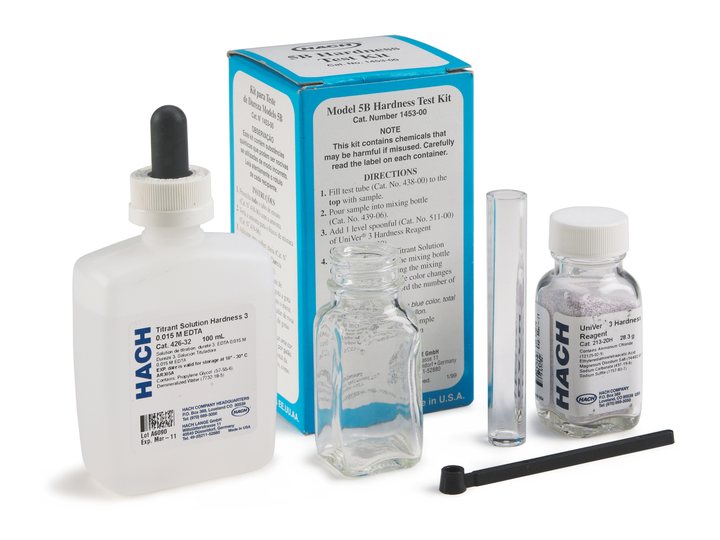
Hach Total Hardness Test Kit 5-B

Drop-count titration kit

Hach Total Hardness Test Kit 5-B

Hach 145300

Add indicator, then count drops of titrant until the sample turns blue: each drop is one grain per gallon. That reads hardness directly in the unit a softener valve asks for.

Method
EDTA drop-count titration, UniVer 3 indicator
Range
1–30 gpg, one drop per gpg
Tests
About 100

Suits: Setting a softener's hardness value, and checking the output after it regenerates.

Weigh: It takes a minute per test and some care with the drops. About 100 tests from the reagents, up to 30 gpg.
View on Amazon

Test strips

Varify Water Hardness Test Strips

Varify Hardness test kit, 150 strips

Dip a strip and match the pad to the chart. A quick yes-or-no on whether the water is hard, and a rough reading for checking a softener's output.

Range
0–25 gpg, 0–425 ppm (listing)
Count
150 strips: a bottle of 100 and two sealed pouches

Suits: A first check before buying anything, and spot checks after the softener regenerates.

Weigh: Color-match strips read in steps, so a reading between pads is a guess. Use a titration kit to set the valve.

View on Amazon

Test strips

WaterWorks Total Hardness strips

Industrial Test Systems 480008

Industrial Test Systems strips with pads at 0, 40, 80, 120, 180, 250, 425 and 1,000 ppm, about 0 to 58 gpg. The wider range covers very hard well water that tops out other strips.

Range
0–1,000 ppm, about 0–58 gpg
Count
50 strips

Suits: Well water that may be past 25 gpg, where a strip that tops out is no help.

Weigh: The steps are wide at the high end (250 to 425 ppm is roughly 15 to 25 gpg), so they place the water in a class rather than give a setting.

View on Amazon
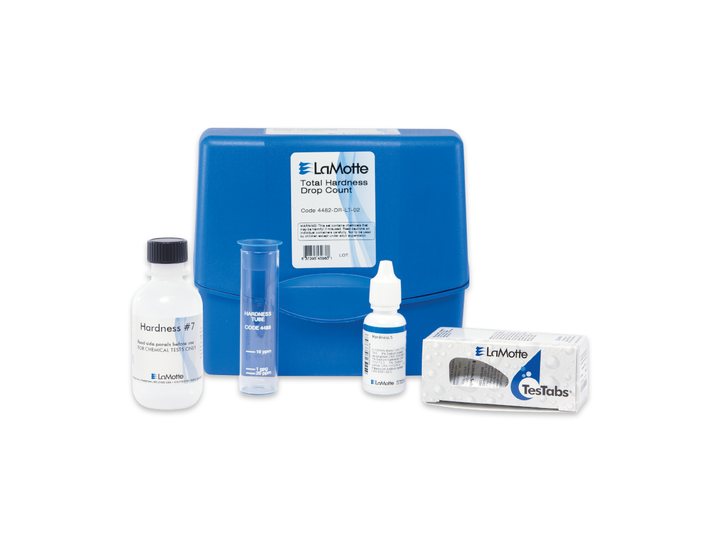
LaMotte Total Hardness Direct Reading Titrator

Direct-reading titration kit

LaMotte Total Hardness Direct Reading Titrator

LaMotte 4482-DR-LT-01

A tablet indicator and a direct-reading titrator that reads hardness off the syringe scale in 4 ppm steps from 0 to 200 ppm. Multiply ppm by 0.058 for grains per gallon.

Method
Tablet indicator, direct-reading titrator
Range
0–200 ppm in 4 ppm steps (about 0–11.7 gpg)
Tests
50

Suits: Anyone who wants a lab-style reading and will convert from ppm.

Weigh: Costs more than the Hach drop kit for 50 tests, and tops out at 200 ppm (about 11.7 gpg), below a lot of Florida well water.

View on Amazon